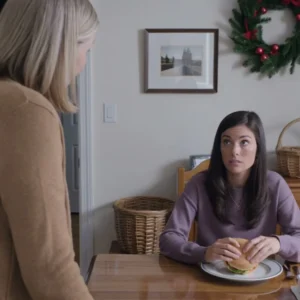
The moment I came home, my son and daughter-in-law were waiting—furious—yelling that he had “almost had a heart attack” at the ATM.
But after what I told them… they went completely silent.
My name is Patricia Lane. I’m sixty-nine, and for the past two years, something had felt wrong—like a quiet tension sitting in my chest that I couldn’t ignore.
It started with small things. My son Ryan offered to “simplify” my finances after my husband passed.
He set up automatic payments, took my debit card “for safety,” and Kendra, my daughter-in-law, began sorting my mail, throwing away anything she labeled unnecessary.
At first, I appreciated the help. Grief makes everything heavier.
But then things stopped making sense.
My kitchen was half-empty even though my pension arrived every month. The pharmacy said my prescriptions were ready when I hadn’t requested them.
And whenever I asked about my bank statements, Kendra would smile and say, “Don’t worry, we’ve got it handled.”
We.
That word should have been my warning.
The turning point came when I asked for my debit card back.
Ryan’s expression hardened. “Why? So you can lose it?”
“I’m not a child,” I said.
Kendra laughed lightly.
“We’re just looking out for you.”
Looking out.
So the next morning, I went to the bank as soon as it opened. I brought my documents, opened a new account under my name alone, transferred my pension, changed all my passwords, and asked the teller to flag any unauthorized access on the old account.
Walking out, I didn’t feel strong.
I felt heartbroken—because protecting yourself from your own child is never easy.
That night, I said nothing. I cooked dinner.
They acted like everything was normal.
Until 9:17 p.m.
The front door slammed open. Ryan stormed in, red-faced and furious, Kendra right behind him.
“What did you do?” he demanded.
I calmly kept stirring the soup.
He shoved his phone at me. “My card was declined!
I almost had a heart attack at the ATM!”
Kendra added sharply, “We use that account to pay bills!”
I set the spoon down and looked at them.
“You pay bills,” I said. “With my pension.”
Ryan snapped, “Because you can’t manage it!”
I nodded slowly.
Then I said the one sentence that changed everything:
“I can manage it. That’s why you no longer have access to it.”
Their anger turned into shock.
Because they weren’t worried about me.
They were worried about losing control.
Ryan stared at me.
“You can’t just move everything without telling us!”
Kendra crossed her arms. “This is financial abuse.”
I didn’t react. People who lose control often call boundaries “abuse.”
“Sit,” I told them.
“What exactly do you do for me?” I asked.
“We manage your money.
We protect you,” she said.
“And in return,” I replied, “you take ‘gas money’ from my pension.”
Ryan flushed. “I drive you places!”
“Twice this month,” I said. “But you withdrew cash six times.”
Silence.
Facts slowed them down.
“So you don’t trust your own son?” he asked.
“Trust is earned,” I said.
“And you lost it when you hid my statements and kept my card.”
Kendra tried to soften it. Ryan tried guilt. But I didn’t let them twist the truth.
Then I showed them the evidence—withdrawals, purchases, records.
Everything.
“I’m not calling the police,” I said.
“I don’t want to destroy you. I want this to stop.”
Kendra panicked. “Stop what?
Helping you?”
“Stop using me,” I answered.
I laid down clear rules: my finances are mine. No access without permission. Everything must be transparent.
And we go to counseling—because trust doesn’t rebuild on its own.
Ryan asked quietly, “And if we don’t agree?”
“You can move out,” I said. “This is my house.”
That was the moment everything shifted.
Not just shock—but realization.
They had never truly had control.
Kendra tried one last threat—bringing up my grandchild.
I refused.
In the end, they agreed—not because they wanted to, but because they had no choice.
And slowly, things began to change.
It wasn’t easy. It wasn’t comfortable.
But it was honest.
Here’s what I learned at sixty-nine:
Helping someone is love.
Controlling them is not.
And if someone panics when they lose access to your money…
they were never protecting you.
They were depending on you.
I changed my account.
They panicked.
And in that panic, the truth finally revealed itself—
so I could take back control of my life while I still had time.