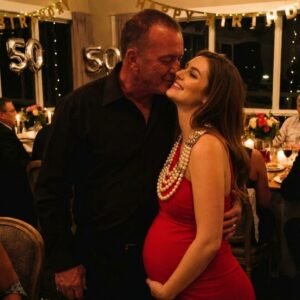
Vanessa’s voice shook so badly I had to press my phone harder to my ear to make out the words. “He signed things this morning,” she whispered. “Before the ceremony.
Mom was there. They said it was just… routine.”
Routine. That word again—the family favorite.
The one they used when they didn’t want questions. “What things?” I asked. There was a pause, the kind that tells you someone is choosing between denial and survival.
“Power of attorney,” she said. “And a prenup addendum. They said it protected me.
They said it was standard with his family.”
I closed my eyes. The café smelled like burnt espresso and rain-damp wool. A couple at the next table laughed over pastries.
Somewhere nearby, a busker played an accordion like joy was uncomplicated. “Vanessa,” I said carefully, “did you read them?”
She let out a sound that wasn’t quite a sob. “Mom said I didn’t need to.
She said you would’ve made it weird.”
There it was. The real reason I wasn’t invited. Not because I’m awkward.
Not because I embarrass people. Because I read. Because I ask.
Because I don’t confuse polish with safety. My phone buzzed again—my mother this time, relentless. Come home now.
You’re being selfish. This is a family emergency. I watched the cheapest return flight disappear from the screen and felt something settle in me—not panic, not guilt.
Clarity. “I can’t come home today,” I told Vanessa. “But you need to stop listening to Mom and start listening to your instincts.
Where are you right now?”
“In the bridal suite,” she whispered. “They told me to stay put.”
“Good,” I said. “Stay there.
And don’t sign anything else.”
I hung up and stood, legs shaky but steady enough. I walked back into the rain and called the one person my mother never liked because she couldn’t charm him: my uncle Aaron—my dad’s younger brother, the one who left town early and built a life that didn’t revolve around approval. He answered on the second ring.
“Kayla?” he said. “I was wondering when you’d call.”
That stopped me cold. “I saw the video,” he continued.
“And I saw the paperwork. Your mom asked me to witness something this morning. I said no.”
My heart thudded.
“You saw it?”
“I read it,” he said. “Wesley’s family is clean on the surface and sharp underneath. That addendum gives him control if Vanessa’s deemed ‘emotionally unstable.’ Guess who insisted on that language.”
I didn’t need him to say her name.
“What do I do?” I asked. “You’re already doing it,” he replied. “You’re not there to be silenced.
You’re there to be clear.”
He called a lawyer he trusted. He sent screenshots to Vanessa. He told her to delay the ceremony if she could, and if she couldn’t, to walk out before she signed another word.
Back in Seattle, the reception unraveled without me. The video spread—Wesley’s temper, his grip on my mother’s wrist when she tried to smooth it over, the way the room went still because money doesn’t protect you from witnesses. Vanessa locked the bridal suite door.
She didn’t walk down the aisle. She left with Uncle Aaron and a lawyer and her phone buzzing with messages that finally sounded like fear on the other end. By the time I boarded my flight home two days later—on my terms, not theirs—the story had changed again.
My mother called once. Her voice was brittle. “You’ve caused irreparable damage.”
“No,” I said softly.
“I stopped pretending everything was fine.”
When I landed, Vanessa was waiting at baggage claim in a hoodie and sneakers, eyes red but clear. She hugged me like she’d just stepped off a ledge and found ground. “I should’ve listened to you,” she said.
“You did,” I replied. “Just in time.”
We drove through wet streets toward a future that hadn’t been planned for us. The wedding never happened.
The paperwork never stuck. Wesley’s shine dulled under scrutiny. And my mother learned something she never expected to learn from me:
Control only works when silence cooperates.
I went to Paris to disappear. I came home knowing exactly who I am. They thought I’d embarrass a rich groom.
Turns out, the truth doesn’t need an invitation—and I don’t need permission to tell it.