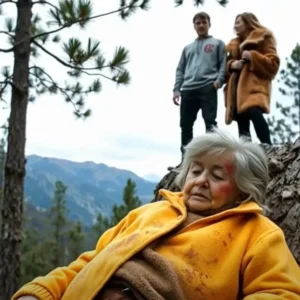
They told me not to visit.
They said the house was under renovation. Five years.
I believed them.
My name is Caroline Mercer. I’m sixty-two years old, a retired literature teacher from Portland, Oregon, the kind of woman whose life once ran on gentle routines—coffee strong enough to wake the dead, dirt under my fingernails from the garden, and quiet mornings on my porch watching the neighborhood come alive one dog walk at a time.
For a long time, I thought my story had already delivered its last big plot twist.
I’d spent decades teaching teenagers how to recognize foreshadowing, how to listen for the moment a character’s life tilts and can’t return to what it was.
Then life did it to me, without permission.
My son, Michael, was a pediatric oncologist. Brilliant. Gentle.
The kind of doctor parents remembered for the rest of their lives because he didn’t talk to them like they were paperwork. He had a way of lowering his voice when the room felt too sharp, and somehow the air would soften around him.
After he married Sophie—a biomedical researcher with calm eyes and a mind that moved faster than conversation—they moved to the coast and bought a house in Mendocino, California.
The first time Michael mentioned it, his voice sounded lighter than it had in years.
“It’s right on a cliff,” he said. “You can hear the waves from the kitchen.”
I pictured a little place with wind-chimed porches and salt-stained windows.
A house where my son would finally sleep without the hospital lights living behind his eyelids.
I asked when I could come.
“Soon,” he promised. “Once we get it fixed up.”
And then, over time, “soon” turned into “not yet.”
Every holiday, every birthday, every stretch of empty calendar, I asked again.
Michael would smile in that careful way he’d developed after he married, like he was trying to keep peace on a surface that wanted to crack.
“Not yet, Mom,” he’d say. “The renovations are still a mess.”
Sometimes Sophie would appear in the background of our video calls, passing behind him with a mug of tea, her hair clipped up, her expression polite but distant.
She always waved. She always said hello.
She never once said, “Come visit.”
At first I told myself it was normal.
Young couples want privacy. Doctors work long hours.
Researchers live inside deadlines. The coast was far from Portland, and I didn’t want to be the mother who pushed.
So I waited.
I waited through Thanksgiving table settings for one. I waited through Christmas mornings where I hung Michael’s childhood stocking out of habit and then felt foolish for doing it.
I waited through birthday candles I blew out alone, promising myself I didn’t mind.
I mailed packages—homemade jam, a scarf I knit during rainy weeks, a used paperback of Steinbeck with notes in the margins like I used to give my students.
Most of the time the packages came back.
RETURN TO SENDER.
ADDRESS UNKNOWN.
And when I asked Michael about it, he’d blink like he was surprised, like it was the first time he’d heard of it.
“That’s odd,” he’d say. “We’ve been… switching things around. I’ll send you the right mailing address later.”
Later never came.
For the first two years after they moved, Michael still called on Sundays.
It was our tradition. Even when he was a broke resident, even when he was half asleep, he’d call. We’d talk about small things—what I planted in the backyard, what he ate between rounds, a book I was reading, a movie he was too tired to finish.
Then the calls shortened.
Then they shifted to texts.
Then, some Sundays, nothing.
Grief has a strange way of teaching you that the small absences are sometimes louder than the big ones.
An unanswered call can bruise a heart more quietly than a slammed door.
By year three, I stopped asking as often.
By year four, I started lying to my friends.
“How’s Michael?” they’d ask over coffee at the farmers market.
“He’s busy,” I’d say, smiling too brightly. “But happy.”
By year five, I could say “renovations” without it tasting bitter.
And then, one morning, my life split.
It was a Wednesday. Portland was doing what Portland does—gray sky, rain that couldn’t commit to being heavy or light, just constant enough to make the world feel muted.
I had just poured coffee into my favorite mug, the one with a chipped rim from the year Michael left for college.
My phone rang.
Unknown number.
I almost let it go to voicemail.
Something in me answered anyway.
“Mrs. Mercer?” a man’s voice said.
His tone was calm in the way people speak when they’re about to destroy your world, like they’re trying to keep you from falling apart in front of them.
“This is David Lauren,” he continued. “I’m Michael Mercer’s attorney.”
My hand tightened around the mug.
It was like my body understood before my mind did.
“Is Michael…?” I started.
There was a pause so careful it felt practiced.
“I’m so sorry,” he said. “There was a boating accident.”
The words didn’t crash over me like a wave. They seeped in.
Through every crack. Quiet, unstoppable.
Michael and Sophie were gone.
I remember the sound of my coffee cup hitting the kitchen floor. The dull clatter, the dark splash, the smell of it spreading like a stain.
I remember staring at the broken ceramic and thinking, absurdly, that I’d have to mop it.
I remember how grief doesn’t always arrive screaming.
Sometimes it comes like fog.
It fills the room so slowly you don’t notice until you can’t see your own hands.
The days that followed moved like I was walking underwater.
There were phone calls. Condolences. A memorial service that didn’t feel real because Michael wasn’t there to roll his eyes at how awkward people get around pain.
There were flowers that wilted too quickly on my dining table, and casseroles delivered by neighbors who meant well.
The hospital sent a letter. A polite paragraph about Michael’s “dedication” and “compassion.” Sophie’s lab sent something similar.
And through it all, the question that kept stinging me was simple:
Why did they keep me away?
Days later, David Lauren asked to meet.
His office was in a small building near downtown Portland, the kind with dark wood trim and a waiting room that smelled like cedar and quiet money. Rain tapped softly at the window.
David was in his fifties, silver hair, glasses that made him look like he’d spent his life reading fine print.
He stood when I walked in.
“Mrs. Mercer,” he said gently. “Thank you for coming.”
He didn’t offer false comfort.
I appreciated that more than I could explain.
His office was neat. A framed photo of a sailboat on the wall. A small plant near the window.
The air smelled faintly of old paper and peppermint tea.
He placed an envelope on the desk between us.
“I have something Michael left for you,” he said.
My breath caught.
The envelope had my name written in my son’s handwriting—slanted, familiar, suddenly unbearable.
Attached to it was a single key.
Not a house key. A heavier key. The kind that looks like it belongs to a gate, or a lock someone didn’t want easily opened.
David watched me carefully.
“Michael wanted you to have the Mendocino house,” he said.
“He put it in a trust. It transfers to you.”
I stared at him, confused.
“The house they never let me see,” I whispered.
He nodded once, like he’d expected that response.
“He said you’d understand when you got there.”
Understand what?
That question followed me home. It sat at the foot of my bed at night.
It crawled into the quiet moments between grief and sleep.
I held the key in my palm, feeling its weight, and it didn’t feel like metal.
It felt like guilt.
Or truth.
Five years of locked doors. Five years of distance. And now an invitation from the grave.
That’s how it began.
With a key and a lie that was never about renovations.
The morning I decided to drive to Mendocino, the sky hung low and gray as if even the weather hesitated to see what waited for me there.
I packed a small suitcase like I was going away for a weekend—jeans, a sweater, my raincoat, a paperback I didn’t expect to read.
Old habits clung to me. I grabbed gardening gloves without thinking, then stared at them and almost laughed.
As if this could be fixed with gloves.
My car—a silver Subaru, because I am a Portland stereotype whether I like it or not—started on the first try. The engine’s familiar hum steadied me.
I placed the key in the cupholder like it was a living thing.
Then I drove.
I could have taken the fastest route, but I didn’t.
Grief makes you do strange things.
Sometimes you choose the longer road because you’re not ready to arrive.
I took Highway 26 west, then down toward the coast, joining the long ribbon of U.S. 101 where the Pacific runs beside you like a witness. The Oregon coastline was misty and relentless—dark water, jagged rocks, pines bent by wind.
The drive stretched like a ribbon of silence beside the ocean.
Every mile carried both memory and regret.
I kept replaying Michael’s voice in my head, soft but distant.
Not yet, Mom.
I remembered how he used to call every Sunday before the “renovations” began, and how the calls grew shorter, then stopped.
I thought about Sophie, too.
The first time I met her was at Michael’s graduation ceremony.
She stood near him, her hand resting on his arm like a quiet claim. When Michael introduced us, she smiled politely, shook my hand, and told me she’d read a poem I mentioned once in conversation with him—something by Mary Oliver.
“You raised him well,” she said.
It was kind. It was also final, like a sentence that closes a chapter.
I told myself not to judge her.
Not everyone shows warmth the way I do. Not everyone likes small talk. She lived in labs and data and careful outcomes.
But over five years, her politeness became part of the wall.
The radio played static for long stretches of the drive.
When stations came through, they were full of chatter and ads I couldn’t focus on. I turned it off.
The world felt quieter without voices trying to sell me happiness.
I stopped once at a little diner in a coastal town where the windows were fogged from coffee steam and the waitress called me “hon” like she’d known me forever. I ate eggs I barely tasted, stared at the ocean through the parking lot, and wondered if Michael had ever sat somewhere like this on his way to his secret life.
Back on the road, the rain turned to light drizzle, then to mist.
The farther south I went, the more the air changed—salt and pine and damp earth, the smell of redwoods in Northern California rising like incense.
By the time I reached Mendocino County, the clouds began to thin.
A pale sun broke through in hesitant streaks, turning the ocean into hammered silver.
The town of Mendocino itself felt like a postcard—white fences, little shops, flowers spilling from planters, tourists moving slowly like the world had fewer emergencies here.
Michael’s house was outside the center, farther out where the road narrowed and the trees opened to cliffside views.
When I saw it, my chest tightened.
It stood at the edge of a cliff, white walls gleaming against the gray-blue sky, wild flowers scattered across the yard as if someone had planted beauty on purpose. Not the messy beauty of “under renovation.” This was curated. Kept.
I stepped out of the car, expecting the sound of construction—hammers, drills, men shouting, the chaos of a place being torn apart and rebuilt.
There was nothing.
Only the wind.
Only the sea.
Only the distant cry of gulls.
I walked up the stone path slowly, my suitcase rolling behind me.
There were no dumpsters. No stacks of lumber. No tarps.
No paint cans. No broken drywall.
Just a clean porch. A door painted deep navy.
A keypad mounted beside the frame, sleek and modern.
My stomach tightened.
I tried the key.
The front door opened easily.
The key fit as if it had been waiting for me.
Inside, the air smelled clean—too clean—faintly chemical, like a hospital corridor after someone has wiped every surface with disinfectant. The temperature was cooler than I expected. Not cold, just controlled.
My footsteps echoed on polished floors.
There were no moving boxes.
No signs of renovation.
Everything was spotless, organized, almost sterile.
The living room was minimal—neutral furniture, a soft throw folded perfectly over the couch.
A bowl of smooth stones on the coffee table. A shelf of books arranged by height like someone couldn’t stand visual clutter. I recognized a few titles Michael would never have picked himself.
The kitchen looked like a magazine photo.
A kettle on the stove. Coffee filters stacked neatly beside a machine that looked more expensive than my entire kitchen.
And yet… it didn’t feel lived in.
It felt staged.
Like a space pretending to be a home.
I wandered down a hallway lined with doors.
My hand trembled when I reached the first one.
I opened it.
At first, my brain refused to label what I was seeing.
Six small beds, narrow and white, lined up like a children’s ward. Machines with blinking lights beside them.
IV poles. Monitors still running, their screens glowing softly with numbers and lines.
There were tiny blankets folded at the end of each bed. Stuffed animals placed as if someone had been trying to make this place less frightening.
I backed out, heart pounding.
Opened the next door.
Shelves filled with medical supplies.
Labeled bins. Gloves in boxes. Masks.
Bottles of sanitizer. A small refrigerator humming in the corner.
Another door.
A room with file cabinets and a desk. Children’s drawings taped to the wall—stick figures with bright smiles, crayon suns, shaky handwriting that said THANK YOU DR.
M.
My throat tightened so hard I couldn’t swallow.
This wasn’t a home.
It was something else entirely.
I moved through the house like I was afraid my footsteps would wake it. The farther I went, the more the truth pressed in on me.
This place had been built for children.
For sick children.
For children who needed machines in the night.
I stopped in front of a window where the curtains were drawn.
When I opened them, sunlight spilled in, and beyond the glass, the ocean stretched endlessly—blue-gray, restless, alive.
For a moment, my reflection hovered faintly in the pane.
An older woman standing in a hospital that shouldn’t exist.
I whispered into the quiet, my voice small.
“Michael… what were you doing here?”
The wind outside didn’t answer.
But I swear, for a moment, I felt the house breathing.
That first night, I didn’t unpack.
I sat at the kitchen table, staring at the neatness, the silence, the sea beyond the windows. My suitcase stayed by the door like I might run.
I walked from room to room again, as if repetition could make it make sense.
There was no dust.
No abandonment.
This place had been active recently.
Someone had left with intention.
And my son—my quiet, brilliant son—had lied to me for five years to keep me away from it.
I slept in a guest room with plain white sheets, listening to the waves below the cliffs.
Every time the house creaked, my body tensed.
I dreamed of hospital hallways.
I dreamed of Michael calling my name and vanishing around corners.
In the morning, the sky was brighter. The ocean looked calmer, like it was pretending nothing had changed.
I returned to the house with a notebook and gloves, determined to understand what Michael had been hiding.
If this place was a secret, it was a carefully kept one.
The coffee cups in the drying rack were washed and placed upside down like someone had just finished cleaning.
There were charts still on clipboards in the ward.
Medicine sorted neatly in drawers.
A supply closet stocked with fresh linens.
Someone had left with purpose, not panic.
In a small office off the main hall, I found a locked filing cabinet.
The key from Michael’s envelope fit perfectly.
The lock clicked open with the soft finality of a truth stepping into daylight.
Inside were folders labeled with first names.
Emma.
Louise.
Harper.
Jonah.
Children.
Each file had a photo clipped to the front—smiling faces, missing teeth, brave eyes.
Each folder held charts, treatment logs, handwritten notes in Michael’s precise handwriting, and letters from parents.
Thank you for giving her another summer.
We got to celebrate his birthday.
He ran to the mailbox yesterday. He hasn’t run in months.
Some letters were written on expensive stationery, others on torn notebook paper, some with coffee stains and shaky handwriting.
They all carried the same ache.
And gratitude.
One page stopped me cold.
PROTOCOL 7.
73% POSITIVE RESPONSE.
I read the line again and again, certain I’d misunderstood.
My heart started racing, not from hope, but from the scale of what it implied. This wasn’t a messy side project. This was organized.
Documented. Monitored.
It wasn’t an experiment gone wrong.
It was something that—at least here, in these files—had worked.
Dozens of cases.
Children who had been declared terminal by hospitals showed measurable recovery over weeks and months. Not miracle cures.
Not fairy tales. But changes that were real enough to measure, real enough for parents to write letters that sounded like prayers.
In the back of one folder was a printed photo of a little boy on a skateboard.
Under it, in Michael’s handwriting, was one word:
“Alive.”
My vision blurred.
I sat down hard in the office chair, holding one of the letters in my hands.
The words smeared through tears I didn’t remember deciding to cry.
For five years, I had wondered why my son drifted so far away.
I had blamed Sophie.
I had blamed the coast.
I had blamed medicine for taking him from me.
And yes, part of me had blamed myself for not being someone he wanted around.
But now I saw it differently.
He hadn’t been keeping me out of his life.
He’d been keeping me safe.
In a drawer beneath the desk, I found a flash drive.
It was labeled in Michael’s handwriting:
FOR MOM.
My fingers trembled as I plugged it into the computer on the desk.
The screen flickered.
A video file opened.
Michael’s face filled the screen.
He looked tired.
Older than I remembered.
His eyes had a heaviness to them, like he hadn’t slept in months. He was sitting in a room I didn’t recognize, the light behind him dim and clinical.
He stared into the camera for a moment before he spoke, like he was gathering the courage to talk to me honestly for the first time in years.
“Mom,” he began softly.
My chest tightened so hard it hurt.
“If you’re seeing this,” he continued, “it means things didn’t go the way we hoped.”
He swallowed, his jaw tightening.
“This place… it’s more than a clinic.
It’s hope for kids nobody else would treat. The ones who get a ‘no’ stamped on their file and sent home with a pamphlet and a prayer.”
His eyes glistened. Michael blinked slowly, like he refused to let tears become the story.
“We’re running out of time,” he said.
His voice cracked on the last word.
Then he leaned closer, as if he could reach through the screen.
“Promise me you’ll look after them,” he whispered.
“Even if you can’t save me… save them.”
The video ended.
The screen went black.
And the only sound left was the ocean outside, steady and endless, like it had been listening the whole time.
I pressed my hand to my mouth.
“Oh, Michael,” I whispered through tears I couldn’t stop. “What did you do?”
That night, I couldn’t sleep.
The sound of waves below the cliffs felt heavier, almost warning.
I sat in the kitchen with a single lamp on, Michael’s files spread across the table like an impossible lesson plan. Every name was a story.
Every chart was a heartbeat. Every date was a child’s time being bargained for.
Around midnight, I heard tires crunching on the gravel driveway.
My body went rigid.
Headlights swept across the window, then clicked off.
Silence returned so suddenly it felt intentional.
I turned off the lamp and moved carefully to the corner where shadows gathered, my heart beating so loud I was sure whoever was outside could hear it.
Three silhouettes approached the front door.
Before I could react, the keypad beeped softly.
A code.
The door unlocked.
A woman’s voice whispered, clear and controlled.
“No alarm.”
The door opened.
I stepped out of the darkness before I could talk myself out of it.
“Who are you?” I demanded.
The woman startled, then froze.
She was in her forties, hair pulled back, wearing scrubs under a gray jacket like she’d come straight from work. Her eyes flicked to my face.
Then something softened.
“You must be Caroline,” she said quietly.
“Michael’s mother.”
Two others stood behind her—a tall man with a stethoscope around his neck, and a younger assistant carrying a hard case.
They didn’t look like criminals.
They looked like exhausted people trying to keep something alive.
“I’m Dr. Lena Morales,” the woman said. “This is Dr.
James Porter. And Noah.”
James gave a small nod, his expression cautious. Noah held the case like it was fragile.
Lena took a slow breath, as if she’d been preparing for this moment.
“We didn’t expect anyone here yet,” she admitted.
“Michael always said… if something happened, you might come.”
My voice shook despite my attempt to keep it steady.
“What is this place?” I asked. “What did my son turn his house into?”
James answered softly, like he didn’t want the truth to bruise me more than it already had.
“A sanctuary,” he said. “For children whose hospitals gave up on them.”
Lena’s gaze didn’t waver.
“We ran it off the grid,” she said.
“No insurance. No boards. No politics.
Just medicine and time.”
My stomach twisted.
“That’s… illegal,” I whispered, the word tasting wrong in my mouth.
James’s face tightened, a flicker of pain.
“Maybe,” he said. “Or maybe it’s what happens when the system moves too slow for dying children.”
He paused, then added, quieter:
“Your son saved sixty-three lives.”
The number hit me like a shove.
Sixty-three.
Not an abstract concept.
Sixty-three children who breathed longer because of my son.
But then Lena’s voice lowered.
“And the authorities called it illegal experimentation,” she said. “They called it reckless.”
I looked down the hallway toward the ward, toward the little beds and the drawings on the walls.
My throat burned.
“Where are the children now?” I asked.
Lena hesitated.
Then she said the words that changed the shape of everything.
“Four children are still here,” she admitted.
“In the guest house behind the lab.”
Behind the lab.
I hadn’t even seen the lab yet.
“We’re keeping them stable,” James added, rubbing a hand over his face, exhaustion showing through his calm. “But without the next shipment of medication… they won’t last.”
The house fell silent except for the wind against the windows.
In that moment, I realized I wasn’t just standing in my son’s secret.
I was standing in his unfinished fight.
And somehow, impossibly, it was mine now.
The following morning, fog rolled in thick over the ocean, wrapping the property in a soft gray hush. It was the kind of fog that made everything feel hidden, as if the world itself was holding its breath.
Lena made coffee like she’d done it a thousand times in that kitchen.
She moved with familiarity that made my chest ache. Michael must have watched her stand at this counter. Sophie must have argued with James in this hallway.
Noah must have carried equipment through this door.
Their ghosts were in the routine.
I sat at Michael’s desk again, staring at his handwriting on the pages spread before me—notes, formulas I couldn’t pronounce, treatment schedules, lists of supplies.
None of it made sense to me, but the urgency behind every line was unmistakable. It looked like someone writing against a clock.
Lena set a mug down in front of me.
“We can’t stay here much longer,” she said.
Her voice wasn’t dramatic. It was simply true.
“Once the authorities trace Michael’s assets,” she continued, “they’ll come for this property.
They’ll come for anything connected to the work.”
“What about the children?” I asked. The question came out rough.
James leaned against the doorframe, his shoulders slumped like he’d been holding himself upright by force.
“They’re stable for now,” he said. “But without access to the compound Sophie was synthesizing… their cancer will return.
We can slow things down, but we can’t hold the line forever.”
Sophie.
I pictured her in a lab coat, hair clipped up, face composed, hands steady. I pictured her choosing this life, choosing secrecy, choosing risk.
I had been angry at her for years.
Now I wondered what she’d been carrying.
Later that day, Lena walked me across the property behind the main house. The fog had thinned, and the cliffside view was sharp again, the ocean loud below.
A path led to a smaller building tucked behind a stand of cypress trees.
“It looks like a guest house,” I whispered.
“It was,” Lena said.
“And then it became… this.”
Inside, the air was warm and softly lit. The space had been transformed into a place that felt less sterile than the main house—softer blankets, posters on walls, a small bookshelf full of children’s books.
A girl about ten sat on a couch with a fuzzy blanket over her legs, watching a cartoon with the volume low. She looked up when we entered.
Her hair was short and uneven, growing back in soft fuzz.
Her eyes were too old for her face.
She smiled anyway.
“Hi,” she said, like she lived here.
Lena knelt beside her.
“Caroline,” she said gently, “this is Harper.”
Harper gave a little wave.
I couldn’t speak.
In the back room, a teenage boy slept in a recliner with a knit hat pulled over his eyes, headphones around his neck. A younger child—maybe seven—sat at a table coloring, tongue sticking out in concentration. Another lay in bed reading.
Four lives.
Four unfinished stories.
I stood there, my hands shaking, and all I could think was that I used to teach kids this age how to write essays.
I used to worry about late homework and attitude.
And here, in my son’s secret refuge, children were fighting for time.
On the counter near the sink sat a stack of thank-you cards.
One of them had a sticker on the front: a gold star.
The kind I used to put on papers when a student finally understood metaphor.
I swallowed hard.
Michael’s life had become a metaphor I never wanted.
That evening, after the children were settled and the doctors spoke quietly about logistics, I returned to the office and opened another file—one Michael had labeled in block letters:
Inside was a sealed envelope and another flash drive.
My hands shook as I plugged it in.
Michael appeared again on the screen, but this time he looked thinner, paler. The camera angle was slightly different, like he’d recorded it in a hurry.
“Mom,” he said softly. “If you’re watching this, it means Sophie and I couldn’t keep the program safe.”
He paused, eyes flicking down as if he couldn’t bear to look straight at what he was admitting.
“You’ll hear things about us,” he continued.
“Words like illegal. Reckless. Unethical.”
He looked up again, and the intensity in his gaze startled me.
“Don’t believe them,” he said firmly.
“Not without reading the whole story.”
His voice softened.
“We did this because someone had to. Because there are children who don’t have time to wait for the system to agree on what’s allowed.”
He swallowed.
“You can end it,” he said. “Or you can keep it alive.”
Then he leaned closer, his face filling the screen like he was trying to make sure I understood.
“But whatever you choose,” he whispered, “choose knowing it will cost you.”
I sat very still, my breath shallow.
Cost me what?
Money?
Peace? Safety?
Or the last quiet version of myself?
That night, my phone rang from an unknown number.
The sound sliced through the house like a blade.
I stared at the screen for too long, then answered.
“Hello?”
A man’s voice came through, cold and steady.
“Shut it down, Mrs. Mercer,” he said.
“You’re in way over your head.”
My skin went icy.
“Who is this?” I demanded.
But he was already gone.
The line clicked dead.
The next day, Lena found a letter taped to the gate.
No stamp.
No return address.
Just paper fluttering in the wind like a warning flag.
It read:
LEAVE BEFORE THE INVESTIGATION BEGINS.
WE’LL MAKE SURE NO ONE GETS HURT.
Fear settled deep in my stomach, heavy and sour.
I wasn’t built for this.
I wasn’t built for threats and secrecy and danger.
I was a retired teacher. A widow. A woman who once graded essays about symbolism and tended roses and complained about slugs eating my lettuce.
But grief changes you.
It strips you down to what you’re truly made of.
That night, I sat in Michael’s chair holding the key that had started everything.
On his desk was a photo of a little girl—bright eyes, gap-toothed smile, her head wrapped in a scarf.
Grace.
One of his first patients.
The one who didn’t make it.
Her smile was pure light anyway, like she refused to let sickness be the whole story.
I ran my thumb over the edge of the photo.
“You left me your fight,” I whispered.
“Didn’t you, Michael?”
The ocean outside thundered against the rocks.
And for the first time, I didn’t flinch.
Two days later, I drove to San Francisco with the flash drives locked in my purse like they were diamonds.
The fog thinned as I approached the city, the skyline rising like teeth through the haze. The Bay Bridge shimmered. Traffic moved in impatient pulses.
My hands gripped the steering wheel until my knuckles went pale.
The GPS led me to a glass tower downtown—the headquarters of Metanex Partners.
I’d seen their name in Michael’s files more than once, buried in emails and old correspondence like a shadow he couldn’t shake.
The lobby smelled of polished marble and money. It was too bright, too clean, the kind of place where even the air felt filtered.
A receptionist with perfect hair looked up as I approached.
“I’m here to see Ethan Cole,” I said.
Her smile tightened.
“Do you have an appointment?”
I leaned slightly forward, lowering my voice the way I used to when a classroom got too loud.
“My son was Dr. Michael Mercer,” I said.
“You know who I am.”
The receptionist’s face changed—just a flicker, but it was enough.
Within minutes, I was escorted to the top floor.
The elevator ride felt endless. The numbers climbed. My heartbeat matched them.
Ethan Cole’s office was all glass and view.
The bay stretched beyond the windows, blue and distant. A sleek desk sat in the center like a throne.
Ethan stood when I entered.
He was younger than I expected. Early forties, maybe.
Sharp suit. Charming smile. The kind of man who could sell sincerity by the pound.
“Mrs.
Mercer,” he said smoothly. “I was so sorry to hear about Michael. He was a visionary.”
He offered his hand.
I didn’t take it.
The smile didn’t falter, but something in his eyes cooled.
“We lost someone remarkable,” he continued.
“Did you?” I asked.
My voice came out steady, which surprised me.
“Because from what I’ve seen… you didn’t lose the research.”
His smile flickered like a glitch.
He gestured toward a chair.
“Please,” he said.
“Sit.”
I stayed standing.
Ethan sighed softly, as if I was being difficult for no reason.
“We have copies of some early data,” he admitted. “Michael was passionate, but unrealistic. He didn’t understand how to protect his work.”
“And you do?” I asked.
“We could have made it legitimate,” he said, spreading his hands like he was offering peace.
“We still can. If you let us.”
He slid a folder across the desk.
Legal documents.
Transfer of ownership. Patents.
Research rights. Fine print designed to swallow everything my son had built.
“In exchange,” Ethan said, “Metanex assumes liability. We handle the legal mess.
We ensure continued development of Protocol 7.”
I flipped through the pages without really seeing them.
“What happens to the children still depending on it?” I asked.
Ethan leaned back, folding his hands.
“Those cases were off record,” he said, voice softening into something almost pitying. “For everyone’s sake, it’s better they’re forgotten.”
Forgotten.
Like they were mistakes.
Like they were inconvenient footnotes in the story of profit.
That was the moment I knew.
The warmth in his voice wasn’t sympathy.
It was threat wrapped in silk.
I closed the folder.
“You want to own it,” I said.
“We want to protect it,” he corrected smoothly. “Think of it, Mrs.
Mercer. Your son’s name in medical journals. A legacy.
But it needs structure and funding—something he couldn’t manage.”
“And what did he do that bothered you so much?” I asked quietly.
Ethan’s eyes sharpened.
He didn’t answer directly.
Instead, he stood and walked to the window, looking out over the bay like he was admiring his own power.
“Medicine is an industry,” he said. “Industries don’t survive on good intentions.”
I felt something in me turn cold.
When I turned to leave, he spoke without looking at me.
“Don’t make the same mistake your son did,” he said softly. “The ocean can be unpredictable.”
I paused at the door.
Then I turned back.
“So can grief,” I said.
And I walked out.
By the time I returned to Mendocino, the threats had grown louder.
An unmarked car sat outside the property at night, parked at a distance where it could watch without being obvious.
Anonymous letters arrived more frequently—slipped under the gate, tucked into the mailbox.
One morning, Lena found the back gate unlocked and tire tracks in the mud.
“Whoever it is,” she said, jaw tight, “they’re getting closer.”
We spent hours in the office sorting through files—digital backups, video logs, handwritten notes—anything that could prove what Michael and Sophie had achieved.
Every page felt like a piece of truth someone was trying to erase.
Then the power went out.
The house went silent in an instant—machines in the ward switching to backup hum, lights blinking off, the ocean suddenly louder without the constant electricity underneath it.
Lena checked the fuse box.
“This isn’t a storm,” she muttered.
“Someone cut the line.”
Fear rose in me like bile.
I stood in the hallway, staring at the darkened windows, and realized something with a clarity that made my knees weak:
They weren’t just trying to stop the research.
They were trying to bury the story.
That night, I made a decision.
I was done hiding.
I remembered a journalist I’d followed for years—Clare Donovan. She was known for exposing medical corruption. Smart.
Relentless. The kind of reporter who didn’t flinch when powerful men tried to intimidate her.
I found her contact information with shaking hands and called.
It rang twice.
“Donovan,” a woman answered, voice brisk.
“My name is Caroline Mercer,” I said. “My son was Dr.
Michael Mercer.”
There was a pause.
Not confusion.
Recognition.
“I know who he was,” Clare said quietly.
My throat tightened.
“I tried to reach him two years ago,” she continued. “He never called back. And then… he vanished.”
“I need help,” I whispered.
Her voice softened just a fraction.
“Tell me where you are,” she said.
The next morning, Clare arrived with a small crew—just enough people to document without turning it into spectacle.
She wore a dark jacket, hair pulled back, eyes sharp as if she could see lies in the air.
She didn’t waste time on sympathy.
She walked through the house, taking in the ward, the files, the drawings.
Then she looked at me.
“This is real,” she said.
“Yes,” I whispered. “And someone wants it gone.”
We spent hours recording interviews.
I told her everything—Michael’s “renovations,” the lie that kept me away, the attorney, the key, the discovery, Lena and James, the children in the guest house, the threats, Metanex.
Clare listened like a blade listening to whetstone.
When I mentioned Ethan Cole, her expression hardened.
“I’ve heard his name,” she said quietly. “Not in ways he’d like.”
Her crew filmed the files without showing identifying details.
They filmed the ward without turning children into spectacle. They recorded the videos Michael left, my tears falling silently as his voice filled the room again.
Every word felt like reopening a wound.
But truth demands blood.
Within days, the story went public.
The headline didn’t try to be poetic. It didn’t need to.
It simply cracked open the silence.
An underground pediatric clinic on the Northern California coast.
A doctor and a researcher who disappeared in a “boating accident.”
A mother who found the truth behind five years of locked doors.
My son’s photo filled every screen.
Every social feed. Every news segment.
Some people called him a hero.
Others called him a criminal.
But it didn’t matter.
The secrecy was broken.
Metanex released a statement within hours, calling the claims fabrications by a grieving mother.
Their lawyers sent warnings. Their spokespeople smiled into cameras and spoke in careful language.
Clare’s network refused to back down.
Public pressure mounted.
And then something happened that Metanex couldn’t control.
Parents began to speak.
Not all of them.
Some were still afraid.
But enough.
A mother posted a video of her daughter ringing a bell after finishing treatment, her voice shaking as she said, “They told us there was nothing left to do.
Dr. Mercer gave us time.”
A father showed his son playing Little League again, whispering, “We were told he wouldn’t see another summer.”
Messages flooded in. Proof collected itself like rain.
For the first time, the narrative wasn’t written by power.
It was written by the people who had been saved.
The unmarked car still came at night.
The letters didn’t stop.
But now, they weren’t whispering into a void.
Now, the world was listening.
Standing on the porch one evening, I watched the ocean shimmer under the moonlight.
For five years, I had waited for permission to see that house.
Now the whole world was seeing what was inside it.
Sometimes I whispered, mostly to myself, “The only way to protect a secret is to expose it.”
Two weeks after the story went viral, everything around me turned into chaos.
News vans lined the cliff road.
Drones buzzed overhead. Lawyers filled my voicemail with warnings and offers and threats disguised as advice.
Authorities announced an investigation.
But I knew investigations could be steered. Delayed.
Smothered in procedure.
If this was going to reach the people behind my son’s death, I needed more than headlines.
I needed Ethan Cole to speak.
So I called him.
When his assistant answered, her voice tight, I said, “Tell Mr. Cole I’m ready to talk.”
There was a long pause.
Then, finally, Ethan himself came on the line.
His tone had changed. Still smooth, but now with caution beneath it.
“Mrs.
Mercer,” he said. “I’m glad you called.”
“I’ve changed my mind,” I told him. “I’m willing to cooperate.
I’ll hand over Michael’s data.”
His voice warmed instantly, like a switch flipped.
“That’s the right decision,” he said. “Let’s meet in person.”
We arranged to meet at a coastal hotel halfway between Mendocino and San Francisco—far enough from my property to feel “neutral,” close enough for him to travel without suspicion.
Before I left, Clare met me in the kitchen.
She placed a small pendant on the table—an antique silver locket that Sophie had once worn in a photo I found in one of the files.
“We put a recorder inside,” Clare said quietly. “It’ll pick up everything.”
My hands trembled as I picked it up.
The locket felt heavier than it should have.
“He’ll try to charm you,” Clare warned.
“He’ll talk like he’s doing you a favor. Just let him talk.”
“What if he realizes?”
Clare’s gaze was steady.
“Then we end the meeting,” she said. “But I don’t think he will.
Men like him don’t imagine consequences until they’re already in them.”
The hotel restaurant was quiet, elegant, expensive. Soft music played under polite conversation. The windows looked out over a stretch of coastline where waves rolled in like they’d done for centuries, indifferent to human greed.
Ethan arrived right on time.
He stood, smiling as if we were old friends.
“Caroline,” he said, using my first name like it was intimacy.
“Thank you for coming.”
I wore Sophie’s pendant around my neck.
I felt it rest against my skin like a heartbeat.
Ethan ordered wine. I asked for tea.
He laughed softly, like my choice was quaint.
“You did the smart thing,” he said. “We can make this right for everyone.”
He talked for nearly twenty minutes, circling the same pitch.
Funding.
Protection.
Control.
Legacy.
He spoke as if my son’s work belonged to the world—but he meant it belonged to him.
I nodded at the right places, pretending to consider.
Then, when his confidence seemed full enough to spill, I asked quietly:
“What really happened that night on the boat?”
Ethan froze.
Just for a second.
But the pause was a crack, and I saw what was underneath.
His eyes narrowed slightly.
“Accidents happen,” he said slowly.
I kept my voice calm, the way I used to when a student tried to lie badly.
“Michael was a liability,” I said.
“He wouldn’t compromise.”
Ethan’s lips curved, barely.
He looked almost amused.
“He left us no choice,” he said.
The words landed on the table like a dropped glass.
My stomach turned, but I kept my face steady.
“Do you know how much one discovery like his could cost the industry?” Ethan continued, voice lowering as if he was sharing a secret. “How many ‘standard treatments’ would suddenly look outdated? How many contracts would collapse?”
He wasn’t confessing like a man ashamed.
He was confessing like a man proud of his logic.
Every word dripped with certainty.
And he didn’t notice the small light blinking inside the pendant at my throat.
I waited until he finished, until the silence felt heavy.
Then I stood.
My chair scraped softly across the floor.
Ethan looked up, confused.
“Where are you going?” he asked.
I leaned slightly closer, my voice barely above a whisper.
“You just confessed,” I said.
His expression shifted.
A flash of anger.
Then calculation.
“What are you talking about?” he snapped.
Behind him, footsteps approached.
Two federal agents appeared, badges raised.
Ethan’s face went pale in a way money couldn’t fix.
Clare entered behind them, camera rolling, her eyes sharp and unafraid.
Ethan’s composure cracked.
“You set me up,” he hissed, his voice low and venomous.
I met his gaze, surprising myself with how steady I was.
“No,” I said quietly.
“You did that yourself.”
As they led him away, Ethan’s anger flared, but it didn’t touch me the way I expected.
I didn’t feel triumph.
I didn’t feel revenge.
I felt release.
The kind that comes when truth finally exhales after years of being buried.
Justice didn’t roar that day.
It whispered.
But I heard it clearly.
Three months later, the house by the sea was no longer a secret.
The gates stood open. Sunlight spilled across the gravel path. The ocean sounded the same, but the air felt different—less hidden, less haunted.
The investigation confirmed what Metanex had been suppressing.
Michael’s research had threatened a pharmaceutical monopoly.
Ethan Cole and several executives were indicted.
There were court filings, hearings, lawyers speaking into microphones, people pretending they hadn’t known what they’d been doing.
And through it all, the most important thing happened quietly, away from cameras.
The Mendocino property was converted into a legal pediatric treatment center under federal supervision.
Not because the system suddenly grew a conscience, but because the world wouldn’t let it look away anymore.
They named it the Grace Foundation, after the little girl whose photo sat on Michael’s desk.
I didn’t argue. It felt right.
Every week, I drove down from Portland when I could. Sometimes I flew.
Sometimes I took the long road again, because now the coastline didn’t feel like a threat.
It felt like a promise.
I watched children run along the garden path with IV poles decorated in ribbons and stickers. I watched parents smile again, the kind of smile that looks like it came back from the edge.
Nurses played soft music through the halls. Someone hung children’s art in frames instead of taping it like an afterthought.
The place still smelled clean, but now it also smelled like soup, like crayons, like life trying again.
Lena became the medical director. James handled research. Noah still fixed every machine with quiet devotion, like he was mending time itself.
They always saved a chair for me by the window.
Sometimes I read to the kids.
I brought books from my own shelves—Charlotte’s Web, The Secret Garden, old poetry collections with pages softened by years of hands.
I used my teacher voice, the one that could make a room settle.
One boy asked me once, his eyes wide and serious.
“Was your son a doctor, too?”
I smiled, and my throat tightened the way it always did when Michael’s name brushed against air.
“He still is,” I said softly. “In his own way.”
At night, when I stayed in the small upstairs room overlooking the sea, I sat at the desk and wrote letters I never sent.
Letters to Michael.
I told him about every milestone.
Every child whose scans improved.
Every parent who cried in relief instead of grief.
Every storm that passed without breaking the windows.
I told him that his secret didn’t die with him.
It became a legacy.
One evening, I placed his photo on the window sill and whispered, “We did it, Michael.”
Outside, the waves below glowed orange in the setting sun.
For the first time in a long while, I felt peace.
Not because everything was fixed.
Not because the world was suddenly fair.
But because I had found a reason to keep going.
The house had started as a lie.
Five years of “renovations.” Five years of distance. Five years of waiting.
But now, it was the most honest place I’d ever known.
Some nights, when the wind sweeps across the cliffs, I still hear Michael—not words, not sentences, just the rhythm of his calm breathing as he worked through the night, trying to save one more child.
People ask me if I ever wanted revenge.
I tell them the truth.
No.
Revenge is short-lived.
What I wanted was continuation.
To finish what they tried to destroy.
To prove that courage doesn’t vanish with age.
It deepens with time.
I used to think justice was loud—sirens, headlines, courtroom applause.
Now I know it’s quieter than that.
Justice is a nurse holding a child’s hand during treatment.
It’s a mother watching her son’s work live on after he’s gone.
It’s the ocean, endless and forgiving, washing away what was broken so something new can grow.
Before I leave each visit, I walk down to the cliff’s edge, close my eyes, and let the wind whip my hair into my face the way it always does.
I listen to the waves.
Then I whisper, “We did it.”
And in my palm, sometimes without thinking, my fingers curl as if I’m still holding that first heavy key—the one that opened a door I was never meant to see, and a truth big enough to change everything.