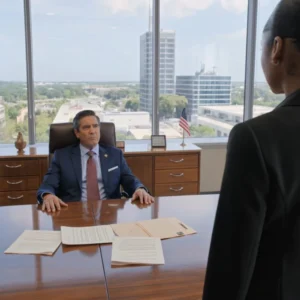
Two mornings after I wrote the last check for my son’s wedding—eighty thousand dollars to the Gilded Oak for the ballroom, the flowers, the jazz trio, the crystal, the late-night dessert station, and every other polished little detail rich people pretend they do not care about—the restaurant manager called me in a whisper and said, “Mr. Barnes, please do not put me on speaker.”
His voice sounded wrong. Thin.
Frayed. Like a man standing in the dark with one hand over the receiver.
“We were reviewing the security footage from the VIP lounge after the reception,” he said. “You need to come see it yourself.
Please come alone. And whatever you do, sir… don’t tell your wife.”
I sat very still at my kitchen table after he said that.
Not quiet. Still.
There is a difference.
Quiet is what a house sounds like when the dishwasher hums and the clock over the stove keeps polite time and the neighborhood outside is all trimmed hedges and delivery vans and somebody’s golden retriever being walked in the distance.
Still is what happens when a room goes cold around you and every instinct you built over a lifetime starts knocking at the inside of your ribs.
My name is Elijah Barnes.
I was seventy years old, two days removed from my son’s wedding, forty years into what I believed had been a faithful marriage, and wealthy enough that bad news usually arrived in suits, not in whispers.
That morning, sunlight poured through the bay windows and spread itself over the granite counters my wife had insisted we replace the year before. The house stood in a gated subdivision outside Atlanta where every driveway looked expensive and every smile had learned how to hold its shape at church. A florist’s bouquet of white lilies sat open on the island.
The refrigerator still had a save-the-date magnet from the wedding. Two silver serving trays from the rehearsal dinner leaned against the backsplash, waiting to be returned.
My wife, Beatrice, stood at the sink humming a gospel tune while she trimmed the stems of the lilies with my kitchen shears.
If you had seen her then, you would have thought what everybody thought.
Devoted.
Elegant.
Soft-spoken.
The kind of woman people trust with prayer lists and casserole recipes and family secrets.
She wore a pale blue house dress and pearl studs and the look of a woman who had just watched her only son marry the woman of his dreams.
I had spent most of my adult life building Barnes Freight & Logistics from one rusted box truck and a rented loading dock on the south side into a regional empire with three hundred vehicles, four warehouses, and contracts that put my grandchildren’s grandchildren in the kind of tax bracket people whisper about. Beatrice had been there when we were eating canned beans at a folding table.
She had been there when we moved into our first brick ranch house. She had been there when I bought my first new truck, first office building, first vacation I could take without checking the numbers every hour.
Or so I believed.
The wedding had been beautiful. My son Terrence looked proud and tearful in his tuxedo.
His new wife Megan looked radiant in ivory silk and strategic innocence. During the reception, I had pulled them aside and handed them the deed to my lake house as a wedding gift—a half-million-dollar property, clear title, no mortgage, tucked away on a quiet stretch of water where I had once imagined future grandbabies learning to fish off the dock.
Terrence cried when I gave it to him.
Megan smiled.
At the time, I noticed the difference but not the meaning.
Now, with Tony’s whisper still in my ear, I remembered something else: after Megan glanced down at the papers, she had looked across the room at Beatrice. Just one quick look.
A flick of the eyes. Too fast to hold. Too precise to be nothing.
Not gratitude.
Confirmation.
“Honey?”
Beatrice turned from the sink and looked at me, still holding the flowers.
“Who was that?” she asked.
“You look pale.”
There are moments in a man’s life when his whole future depends on whether his face betrays his heart.
Mine had been trained long ago.
I had negotiated with union bosses who smiled while they tried to gut my margins. I had sat across from bankers who wanted to smell fear before they extended credit. I had survived city inspectors, crooked vendors, fake partners, and two recessions.
A man does not stay in business that long by offering the truth to the first person who asks for it.
I set my phone facedown on the table and reached for my coffee.
“Pharmacy,” I said. “They messed up my blood pressure refill again. I need to go straighten it out before lunch.”
She watched me for half a second too long.
Then she smiled.
“Oh, I can drive you,” she said lightly.
“You shouldn’t be out if you’re dizzy.”
I stood up slowly and patted her hand where it rested on the back of my chair.
“I’m fine, Bea. Just irritated. Fresh air will do me good.”
Her fingers tightened just enough for me to feel it.
“Well,” she said, “don’t be long.”
I nodded, grabbed my keys, and walked out through the mudroom into the garage.
I owned cars that cost more than my first two houses combined.
A silver Mercedes in storage. An old Ferrari I almost never drove. A restored Lincoln that made other men my age feel proud for me.
That morning I got into my 2015 Ford F-150.
I always said I drove the truck because it kept me humble.
That was only half true.
The real reason was that trucks taught you things luxury sedans did not.
Trucks let you disappear in plain sight. Trucks made people underestimate you. Trucks were honest.
They rattled when something was loose.
As I backed down the driveway, I glanced up at the kitchen window.
Beatrice was standing there.
No smile now.
No lilies in her hand.
Just her face framed by white trim and morning light, watching me go with a blankness I suddenly understood as something colder than indifference.
The drive to the Gilded Oak usually took twenty minutes if Peachtree traffic behaved itself. I made it in fifteen.
My mind kept replaying the wedding in fragments.
Terrence’s tearful hug.
Megan’s cool little smile.
Beatrice dabbing her eyes when the minister spoke about legacy.
The bridal party laughing for pictures.
The champagne tower.
The band playing Al Green.
My own hand resting on the envelope with the lake house deed, proud of myself for having built something worth giving.
By the time I turned behind the restaurant toward the service entrance, I was sweating through the back of my shirt.
Tony was waiting near the loading dock, pacing between two industrial dumpsters like a man rehearsing a confession.
He was usually immaculate. Slick hair.
Sharp jacket. Pocket square. The kind of young restaurant manager who could pronounce French wines and calm down entitled guests without ever raising his voice.
That morning he looked like he had not slept.
He hurried to my truck before I had fully parked.
“Mr.
Barnes,” he said, opening my door for me, “thank you for coming. Come inside. Please.”
He led me through the rear kitchen, past stainless steel counters and prep cooks slicing herbs for lunch service, down a narrow back stairwell into a basement security room that smelled of stale coffee and warm electronics.
No windows.
Just humming servers, stacked monitors, and a battered leather chair in front of a screen.
“Sit down, sir,” Tony said.
I stayed standing.
“Tony,” I said, keeping my voice level, “I have known you five years.
I tipped your staff ten thousand dollars after the reception. Start talking.”
He swallowed.
“We were doing the post-event audit,” he said. “The owner insists on reviewing footage after every high-profile private event.
Liability reasons. Staff access, leftover alcohol, missing items. The VIP lounge camera is supposed to be checked last because that room’s usually empty after the event.”
He paused, looked at the floor, then back at me.
“It wasn’t empty.”
I felt my jaw lock.
“Who was in it?”
Tony hesitated only a second.
“Your wife,” he said.
“And your daughter-in-law.”
I sat down.
Tony typed a password into the system and pulled up a video file marked with the wedding date. The timestamp read 11:46 p.m.
He clicked play.
The screen showed the VIP suite we had rented for the bridal party. Soft lamps.
Leather sofa. Mini-bar. Flower petals still scattered near the mirror.
Empty champagne flutes on a side table. The party had ended. The staff had not yet cleaned the room.
The door opened.
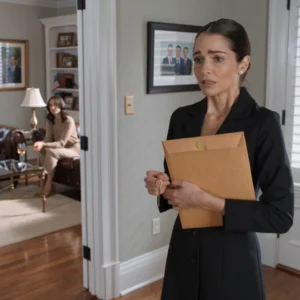
Beatrice walked in first.
Not the slower, more delicate version of herself she performed at church and family gatherings.
She moved with brisk certainty, shoulders straight, heels confident, as if she had been waiting all night to finally be alone.
She crossed to the mini-bar, opened a bottle of champagne, and poured two glasses.
A second later Megan came in, barefoot, carrying her heels in one hand. Her hair was loose from the wedding pins. The train of her dress trailed behind her like something already used.
Beatrice handed her a glass.
They clinked.
Megan took a long sip and said, clear as day, “To the stupidest man in Atlanta.”
Tony turned to look at me.
I did not blink.
On the screen, Beatrice laughed.
I had never heard that laugh before in my life.
It was sharp and ugly and young in the worst way.
“To Elijah,” she said.
“The goose who keeps laying.”
My hands closed so hard around the arms of the chair the leather creaked under my fingers.
Megan dropped onto the sofa and kicked her feet onto the coffee table.
“God,” she said, “I thought today would never end. Did you see his face when he gave us the deed? He really thinks I want to spend weekends at a lake house with mosquitoes.”
“It’s not the house,” Beatrice said.
“It’s what the house becomes. We let the ink dry, wait a few months, sell it clean, and that gives you breathing room.”
“Makes my student loans disappear,” Megan said.
“And gets the condo started,” Beatrice replied.
I stared at the screen.
Miami.
Condo.
The words landed wrong in my ears because Beatrice hated Miami with the theatrical disgust of a woman who liked to be seen hating the right things. She called it loud and vulgar and godless.
She once said the ocean there looked like it had been sprayed on.
Yet she spoke about it now like a partner reviewing an investment.
Megan rubbed her stomach and made a face.
“I just hope Terrence doesn’t get suspicious,” she said. “He’s clingier than I realized. It is exhausting pretending all the time.”
Beatrice sat beside her and patted her knee.
“You only need to pretend a little longer,” she said.
“Once the baby is here, everything shifts.”
My blood went cold.
There was, in fact, a clause in the Barnes family trust that my father had insisted on before he died. Stubborn old Georgia money wrapped in legal language. The first biological grandchild of the next generation triggered a significant release for long-term family trusts and property transfer options.
Very few people knew the details.
I had never gone over them with Terrence.
Beatrice had.
On the screen Megan leaned back and smiled.
“It’s still funny to me,” she said.
“He thinks the timeline works.”
Beatrice smiled too.
“Men believe what flatters them.”
“Terrence really thinks this baby is his,” Megan said. “He wants it so badly he doesn’t even know how ridiculous he sounds.”
The room spun.
I heard my own breath before I felt it.
On the screen Beatrice lowered her voice.
“Whatever happens,” she said, “you do not mention the trainer again. Not to Terrence.
Not to anyone. If Elijah asks questions or starts talking about tests, we have a problem.”
Megan waved a hand.
“He won’t. Your husband is blind where family is concerned.
He sees what he wants to see. Saintly wife. grateful son.
perfect daughter-in-law. He’s the only one in the room who never gets the joke.”
I had thought the worst had arrived.
It had not.
Megan stood, went to pour more champagne, and said with bored contempt, “So what about the main event? How much longer am I supposed to keep smiling at old people and listening to Terrence talk about nursery colors?
When does Elijah finally… step aside?”
Beatrice took her glass, looked straight across the room, almost toward the camera, and said in a voice as casual as discussing weather, “Soon.”
Megan waited.
Beatrice shrugged one shoulder.
“I’ve been managing his medication,” she said. “A little switch here, a little powder there. Enough to make a weak heart weaker.
If he goes in his sleep, no one asks questions.”
I stopped hearing for a moment after that.
The words kept moving on the screen.
Megan asking if it was risky.
Beatrice saying doctors blame age for almost anything after seventy.
Megan laughing.
Beatrice saying, “By the time anyone notices, the papers will already be in motion.”
But the world inside me had gone soundless.
Forty years of marriage.
Sunday pews.
Hospital waiting rooms.
Christmas photos.
Funerals.
Vacations.
Bills paid.
Hands held.
Prayers spoken.
And beneath all of it, apparently, a woman who had been measuring out my death with a teaspoon.
Tony stopped the video.
The screen went black.
I remained seated because I no longer trusted my legs to know what living men did next.
“Mr. Barnes,” Tony said quietly, “I didn’t know whether to call the police or call you. I was afraid if I went straight to the police, they’d seize the servers before you saw it, and I didn’t want you walking back into that house blind.”
I took a slow breath through my nose.
“Do you have the original file?”
“Yes, sir.”
“Server logs?”
“Yes.”
“Camera angle history?
Audio chain? Backup?”
He nodded.
“I copied everything. Two drives.
One stays with the system. One is for you.”
That was when I knew the Lord, or luck, or plain human decency had put the right young man on that basement shift.
I stood up.
The first wave had been pain.
The second was shame.
The third was something colder and far more useful.
Clarity.
“If I walk into a police station right now,” I said, “they arrest them. Maybe.
Then what? Good lawyers. Bail.
Tears. Church people saying it had to be a misunderstanding. Experts on television talking about doctored video.
My wife saying I’m confused. My son saying I’ve been having spells. My daughter-in-law crying in a maternity dress and telling the world the old man is lashing out.”
Tony didn’t answer.
He knew I was right.
I slipped the silver flash drive he handed me into my pocket.
“You saved my life today,” I told him.
His face tightened.
“Then don’t go home,” he said.
I looked at the blank monitor.
“Oh, I’m going home,” I said.
“But I’m not going home as the husband they think they know.”
In the parking lot I sat in my truck with both hands on the wheel and called the one person in Atlanta who billed a thousand dollars an hour and earned every cent.
Caroline Sterling answered on the second ring.
“It’s Sunday,” she said crisply. “This had better be either a catastrophe or a billion-dollar opportunity.”
“It’s both,” I said. “Open Omega.”
There was a sharp silence on the line.
Protocol Omega was not something we joked about.
Years ago, after an ugly merger fight, Sterling and I had drafted a sealed contingency playbook for total asset lockdown—quiet transfers, layered account freezes, staggered notifications, no movement visible to family until I said so.
“Elijah,” she said slowly, “what happened?”
“My wife and daughter-in-law conspired to steal the estate, pass off another man’s child as the heir, and I have reason to believe Beatrice has been poisoning me.”
Her inhale was audible.
“Where are you?”
“At the Gilded Oak.”
“Stay there.”
“I can’t.”
“You absolutely can.”
“No,” I said. “I need proof that survives crying, lawyers, church theatrics, and AI excuses. Right now I have a devastating video.
I need the rest.”
She cursed softly.
“What do you want?”
“Quiet freeze on every major account. No alerts to the house. Pull the trust documents.
Prepare donation channels for liquidation if I choose scorched earth. And I need a private toxicology consult today.”
“Elijah—”
“And a DNA lab on standby.”
She stopped protesting then.
Lawyers know when a client is panicking.
Great lawyers know when he has gone beyond panic and into method.
“All right,” she said. “I’ll set everything in motion.
But if you go back into that house, you do not eat, drink, or sign anything.”
I looked down at the steering wheel and thought of forty years of breakfast.
“Understood,” I said.
Then I drove home.
Beatrice was waiting in the kitchen when I walked in.
The green smoothie sat on the counter in a tall glass.
Of course it did.
There are moments when evil loses its grandness and becomes almost domestic. Nothing cinematic. Just sunlight on tile.
A woman in an apron. A blender rinsed in the sink. Ice melting in a glass.
“You’re back,” she said, smiling.
“I made your smoothie. You missed it earlier.”
I looked at the glass.
Spinach. kale.
ginger. banana. The usual healthy nonsense she had started making after my cardiologist suggested cutting down on red meat and fried food.
For months I had swallowed whatever she put in front of me, proud of myself for being the kind of husband who let his wife “take care” of him.
I took the glass from her and forced myself to smile.
“You spoil me,” I said.
Her eyes never left my face.
“Drink before the ice melts.”
I raised the glass.
The smell hit me first—greens and fruit and something faintly bitter underneath, something that did not belong in a kitchen where white lilies sat in a vase and gospel music played softly from the speaker by the sink.
I tipped the glass to my mouth and let the liquid touch my lips.
Then I coughed.
Hard.
I turned away, bent at the waist, pressed a folded napkin to my mouth, and let most of the mouthful spill into it while a small amount streaked down my chin.
Beatrice came closer.
“Too much ginger?” she asked.
I laughed weakly and wiped my mouth.
“Maybe.”
I took a second false swallow, then a third, managing each one with the kind of sleight of hand a man learns after decades of business lunches where it helps to appear less sober than he is.
By the time I set the glass down, it was half empty.
Enough to satisfy her.
Not enough to kill me.
I tucked the damp napkin deep into my pocket.
Something changed in her expression then.
Not relief.
Measurement.
Like she had checked a box on a list.
“I think I need to sit down,” I said.
“Of course you do,” she murmured.
I walked into the living room and lowered myself into my recliner. The room still looked like the aftermath of celebration. A congratulatory card from the church.
A stack of ribboned gifts waiting to be delivered. Family photos on the mantel. A silver frame with Terrence and Megan cutting cake.
I stared at all of it until my heart stopped trying to race and started obeying me again.
Then, when enough time had passed, I began the performance.
A hand to the chest.
A rough breath.
A low groan.
“Bea?” I called out.
“Something’s wrong.”
Her heels clicked slowly across the hardwood.
Too slowly.
She appeared in the doorway with the dish towel still in her hand and no urgency in her face at all.
That was almost worse than what came next.
I gasped harder, let my knees slide, then pitched myself sideways off the recliner onto the rug with a thud that jarred my shoulder and sent real pain up my neck.
My cheek hit carpet.
I lay still.
There is no stillness lonelier than pretending to be dead in your own house.
At first I heard nothing but the grandfather clock in the hallway and the refrigerator humming in the kitchen.
Then her footsteps.
Closer.
She stopped beside me.
I waited for panic. For a scream. For a phone call to 911, even a fake one.
Instead I felt the pointed toe of her shoe press into my ribs.
A testing kick.
Not hard enough to injure.
Hard enough to insult.
“Elijah,” she said flatly.
“Can you hear me?”
I did not move.
She kicked me again, sharper this time.
Then she laughed.
Soft.
Satisfied.
A private little laugh of arrival.
“Finally,” she whispered.
My fingers twitched against the carpet, not from the act but from the effort of keeping every other muscle still.
I heard her dialing.
“Pick up,” she hissed. “Pick up.”
Then: “Megan, it’s done.”
A pause.
“Yes. He drank it.”
Another pause.
“He’s down.
Not moving.”
My mouth went dry.
“Bring the binder,” she said. “The medical power papers and the DNR copy. We need everything ready before anybody official gets here.
And hurry. I want this clean.”
She hung up.
Still no ambulance.
Still no CPR.
No hand at my neck to check for a pulse.
Just gospel music turning on low in the background.
Amazing Grace.
I heard it and something in me went from wounded to finished.
Not dead.
Finished.
Whatever tenderness I had left for the woman I married died right there under that hymn.
A little later I heard the front door open and frantic footsteps.
Terrence.
“Dad!”
He dropped to his knees near me. His hand touched my shoulder.
He shook me once, lightly.
“Dad, wake up. Dad, can you hear me?”
Panic shook in his voice. Real panic.
For one brief foolish second, hope rose in me.
Maybe he knew nothing.
Maybe he was weak, yes, but not rotten.
“Call 911!” he shouted.
And then Megan’s voice sliced through the room like a blade.
“Don’t.”
Silence.
“What?” Terrence said.
“Do not call,” she snapped.
“Put the phone down.”
“He might still be breathing.”
“And if they revive him?” she shot back. “Have you thought about that? Have you thought about what happens if he wakes up and nothing changes?”
There was a beat of awful quiet.
Then Terrence, smaller now: “Megan…”
She lowered her voice.
The whole room leaned toward greed.
“We talked about this,” she said. “You said you were tired of begging him for everything. You said you were tired of living under his thumb.
You said you wanted your life.”
“Not like this.”
“Then how?” she demanded. “With another ten years of waiting? Another decade of him controlling every dollar?
We have debt, Terrence. We have a baby coming. We have a future, and it dies if he doesn’t.”
My eyes were closed.
But I saw my son in that moment anyway.
Saw him the way fathers always see their boys: at six with scraped knees, at twelve with a baseball glove, at seventeen driving too fast, at twenty-two asking me for one more chance, at thirty-two on my living room floor deciding whether his father lived long enough to remain inconvenient.
I heard papers rustle.
Then Beatrice’s voice turned gentle, honeyed, maternal.
“Baby,” she said to Terrence, “look at me.
Your father signed a do-not-resuscitate order last month. He told me himself he never wanted machines. He wanted dignity.”
Lie.
I had signed no such thing.
But the forgery did not surprise me now.
After forty years of false vows, a false signature was practically sentimental.
Terrence was crying.
“Mama…”
“I know,” she said softly. “I know this is hard. But if you call, you go against his wishes.
Let him go peacefully.”
Megan added, quieter now, “Just wait.”
A pen clicked.
“Sign here,” Beatrice said.
“What is it?”
“Time of discovery.”
“It says 12:15. It isn’t 12:15 yet.”
“Terrence,” Megan said sharply.
Then I heard it.
The scratch of his signature on paper.
My son signing a lie over the body he thought was mine.
That was the moment I lost him.
Biology would be revealed later.
Betrayal revealed him first.
I did not wait for their five more minutes.
I coughed.
Violently. Raggedly.
Enough to make Megan shriek and Terrence stumble back.
I rolled onto my back, blinking as if dragged from somewhere terrible.
The three of them stared down at me with horror so pure it almost made me smile.
Beatrice recovered first.
“Elijah!” she cried, dropping to her knees. “Oh my God, Elijah, you scared us half to death.”
Her hands grabbed my shoulders. Her nails bit through my shirt.
I made my eyes unfocused.
“What happened?” I rasped.
“Did I faint?”
Terrence was white as a dish towel.
Megan’s mouth hung open.
The binder on the coffee table lay half open with papers sticking out like a guilty tongue.
I looked at it, then at them, then let my gaze wander as though I couldn’t make sense of anything.
“What’s all this?” I asked weakly.
Beatrice snatched up the binder.
“Church budget papers,” she said too fast. “Megan stopped by and Terrence brought some tools.”
In thirty seconds they told four lies and one truth.
Megan had indeed stopped by.
Terrence had indeed brought tools.
Only the tools were legal documents, and they had intended to bury me with them.
I let my shoulders sag against the recliner when they helped me back into it.
“Funny,” I said after a while. “When I was out there for a second, I kept thinking how quickly everything could disappear.
One minute you’re sitting in your own living room. Next minute…” I let the sentence fade.
The three of them watched me like gamblers around a table.
And I gave them what gamblers cannot resist.
Hope.
“I think we need a family meeting,” I said. “Next Sunday.
At church. Lawyer present. Pastor Silas, too.
I’ve been putting off decisions I shouldn’t have put off. If I’m having spells like this, I need to make sure everybody gets exactly what they deserve.”
Greed flickered across Megan’s face before she hid it.
Beatrice pressed a trembling hand to her chest.
Terrence just looked relieved to have words placed over his cowardice.
I pointed toward the kitchen.
“And no more smoothies for a day or two,” I said. “My stomach’s unsettled.”
That, finally, made Beatrice flinch.
I rose unsteadily, played the old-man weakness all the way down the hall, then locked myself in my study.
The first thing I did was take the napkin from my pocket and seal it inside a plastic document sleeve from my desk drawer.
The second thing I did was switch on the monitor linked to the hidden security cameras I had installed months earlier after a string of warehouse break-ins made me paranoid about everything.
The living room camera came alive.
Beatrice, Megan, and Terrence stood in a tense triangle under the soft lamp by the mantel.
The alliance had already started to crack.
“He said one person,” Megan whispered.
“A sole heir.”
“He said family,” Beatrice shot back. “That means me.”
“He said leadership,” Megan said. “He doesn’t think you can run a company.”
Beatrice’s smile vanished.
“You little fool.
You’re carrying leverage, not wisdom.”
Terrence stood between them looking exactly like what he was—a grown man with a mortgage-sized appetite and a boy-sized spine.
“He’s watching us,” he said weakly. “We need to look good this week.”
Megan turned on him.
“We don’t need to look good. We need to look better than her.”
She jabbed a finger toward Beatrice.
Beatrice’s reply was so cold I felt it through the screen.
“Watch your tone.
And remember who still controls the medicine.”
There it was.
Not remorse.
Not fear.
Competition.
I texted Sterling three words.
Bait taken. Proceed.
That afternoon, when the house finally went quiet and Megan left and Beatrice went upstairs to change for evening service, I found Terrence alone on the back porch.
He sat on the porch swing with his elbows on his knees, staring at the lawn like it had personally disappointed him.
I stepped out and let the screen door creak behind me.
He jumped.
“Dad. You should be resting.”
I lowered myself onto the swing beside him.
The chains groaned.
For a while we just listened to the cicadas and the distant hum of traffic beyond the trees.
“Terrence,” I said finally, “I know things have been hard.”
He did not answer.
“I know Megan likes a certain kind of life. I know your mother has opinions about everything. I know being my son hasn’t always been easy.”
That got me a look.
No one is more vulnerable than a weak man who thinks power might finally choose him.
“I don’t want to say this in front of them,” I continued, “but if next Sunday goes the way I’m thinking, I intend to leave the lion’s share to you.
Eighty percent.”
His head snapped up.
“Me?”
I nodded.
“You.”
His eyes shone with something between relief and greed.
“Dad…”
“But there’s a condition.” I let my voice drop. “If I leave it to you, you protect it. You protect the family legacy from people who only want to spend it.
Even if those people sleep in your bed.”
He looked away.
“She can be intense,” he muttered.
“Intense men build things,” I said. “Intense women can, too. But greed hollows people out.
I need to know what kind of man you are.”
His mouth trembled.
For one second—one single second—I thought he might confess everything. The pills. The DNR.
The waiting.
But the back door opened and Megan’s voice cut through the moment.
“Terrence. We need to go over the guest list.”
He stood immediately.
Like a dog hearing its leash.
“I have to go,” he said.
I watched him disappear back inside and knew the truth: whatever softness remained in him was underfed and outmatched.
Still, I needed certainty.
Monday morning gave it to me in pieces.
Beatrice left early for the farmers market, claiming she wanted fresh produce for a healthy dinner. Megan had prenatal yoga.
Terrence went to the office, where he occupied a polished desk in an executive suite he had not earned and did not understand.
The house emptied.
I walked into the upstairs bedroom my son shared with his wife and stood there a moment, looking at the careless mess of two people who mistook luxury for adulthood. Designer shopping bags. A half-drunk glass of white wine on the nightstand.
An expensive throw blanket on the floor. A scented candle burned down to wax. On the marble vanity in their bathroom sat Terrence’s brush.
I picked it up.
Dark coarse hairs were woven through the bristles.
I pulled several free, sealed them in a zip bag, and slipped it into my jacket pocket.
My second stop was First Baptist.
The church smelled of floor polish and old hymnals and fresh coffee.
Monday light cut through the stained glass and made the empty sanctuary look almost innocent.
Pastor Silas Jenkins was in his office, exactly where I knew he would be.
Silas had been in my life more than thirty years. He had officiated my wedding. Baptized my son.
Blessed my business expansions. Held my shoulder when my father died. Eaten my barbecue, ridden in my trucks, prayed over my tables, and apparently all the while been helping himself to what was mine.
He looked up and smiled when I entered.
“Elijah,” he said warmly.
“Brother. Come in.”
I played tired. Frailer than I felt.
Leaned on my cane. Let my voice rasp.
“I had a bad spell yesterday,” I told him. “Needed to talk.”
Concern flooded his face so quickly and so professionally it would have impressed me if I had not already seen beneath the varnish.
He walked around his desk with a disposable coffee cup in hand.
“Sit down,” he said.
“We’ve all been praying for you.”
We.
I almost laughed.
Instead I sat. Coughed. Bent forward.
Asked for water.
Silas turned to the mini fridge in the corner. Set his cup down.
In two seconds, while his back was turned, I took the cup and slid it deep into my jacket pocket, then palmed a tissue to the floor so he’d think his hands had been full and his attention divided.
He returned with bottled water and more concern.
“Take it easy,” he said.
I let him settle me, let him pat my shoulder, let him perform pastoral tenderness within arm’s reach of his own DNA.
Then I left.
Dr. Mateo Arias ran a private lab on the north side and owed me three favors from a university grant fight a decade earlier.
By noon I had placed the sealed napkin, Terrence’s hair sample, and Silas’s discarded coffee cup on stainless steel under bright lights.
He put on gloves and said only, “Tell me what you need.”
“Test the napkin for foreign compounds,” I said. “And compare those two for paternity.”
He looked at the label on the cup, then at me.
“I can have preliminary results fast,” he said. “But you may not like what they say.”
“I already don’t,” I answered.
I waited four hours in his reception room staring at a wall painted the kind of neutral beige doctors think calms people.
At some point I stopped thinking about evidence and started thinking about baseball games.
Terrence at seven, missing every other pitch and grinning anyway.
Terrence at fifteen, sulking because I made him work summers at the warehouse.
Terrence at twenty, drunk on my porch after his first real breakup, crying in my arms and saying he didn’t know how to be a man.
Fathers do not just remember what their children did.
They remember what they forgave.
When Arias came back with the folder, his face was pale.
“The residue on the napkin confirms a dangerous contamination,” he said carefully.
“Had you swallowed what was on that fabric, it could have triggered a fatal cardiac event.”
I nodded once.
“And the DNA?”
He opened the second report.
“The probability is conclusive. Terrence is not your biological son.”
My hand remained steady on the edge of the desk.
That surprised both of us.
Arias hesitated, then turned one page.
“The biological match is Silas Jenkins.”
For a moment the room sharpened so violently it hurt. Every edge too clean.
Every shadow too defined. The world looked like a place after lightning.
I took the folder.
“Thank you, doctor.”
“Elijah…”
But I was already standing.
I walked out to my truck and sat behind the wheel with the DNA report in my lap and felt the last soft corner of my heart fold in on itself like paper near a flame.
Beatrice had betrayed my marriage.
Silas had betrayed my friendship.
Megan had targeted my legacy.
Terrence had betrayed my life.
Whatever mercy remained in the story after that would not be mine.
I called Sterling.
“Activate Omega,” I said.
She was quiet for a beat.
“Fully?”
“Fully.”
“Elijah, once I start selling and moving, you cannot undo it.”
“I don’t intend to.”
“What do you want kept?”
“Nothing for them.”
“And the destination?”
I looked down at the donation brochure pinned to Arias’s waiting room board two feet from where I sat. Westside Children’s Home.
Fundraising breakfast next month. Sixty-eight kids. Aging roof.
A strange calm came over me then.
All my life I had been told to protect blood.
Blood, blood, blood.
As if blood had ever once guaranteed character.
“Westside Orphanage,” I said.
“Set up a trust. Move everything clean. Company sale, liquid assets, properties, all of it.
Quietly.”
“All of it?”
“All of it.”
“And the house?”
“List it.”
“Cars?”
“Terminate what can be terminated.”
Sterling exhaled slowly.
“You’re burning down your own kingdom.”
“No,” I said. “I’m refusing to leave it to termites.”
Tuesday afternoon I met Megan at a coffee shop called the Obsidian Room, the kind of downtown Atlanta place where the chairs were uncomfortable on purpose and water cost too much because the bottle looked European.
She chose it, of course.
The lighting, she once told Beatrice, was “good for content.”
I wore a small recording device disguised as a shirt stud and carried an envelope thick enough to change the temperature of any conversation.
Megan arrived ten minutes late and acted as though she had bestowed punctuality upon me by appearing at all.
She dropped into the booth across from me in oversized sunglasses, set a designer bag beside her, and glanced at her phone before glancing at me.
“Well?” she said. “You said it was urgent.”
I let my shoulders round.
“I’m worried about Terrence,” I said.
She snorted.
“That makes one of us.”
I slid the envelope across the marble table.
“Open it.”
She did.
Cash has a smell if there’s enough of it.
Dry paper. Heat. Possibility.
Her eyes sharpened.
“What is this?”
“Five hundred thousand dollars,” I said.
“For you.”
Her mouth parted slightly.
I continued before she could interrupt.
“Not for Terrence. Not for the baby. For you.
A private arrangement. I’m an old man, Megan. I know what kind of man my son is and what kind of woman you are.
He needs someone stronger. When I’m gone, he’ll need guidance. Stability.
Loyalty.”
For the first time since she sat down, she gave me her full attention.
Not a delighted laugh.
An insulted one.
“You think I can be bought for five hundred grand?”
“It’s a great deal of money.”
“For you maybe fifty years ago,” she said. “For me? It’s offensive.”
She pushed the envelope back toward me with two manicured fingers.
Then she leaned in.
“Drop the sweet old man routine, Elijah.
I know what you have. I know there’s real money. Not show money.
Not lake-house money. Real money.”
I let confusion move across my face.
“I don’t know what you mean.”
“Yes, you do.”
Her voice went low and vicious.
“I’ve seen enough to know there are assets your wife doesn’t even know about. Accounts.
Layers. Quiet money. Do you seriously think I married into this family without doing homework?”
She was bluffing on specifics.
I could tell. But greed doesn’t need facts. It only needs scent.
“What do you want?” I asked.
Her answer came without hesitation.
“Control.”
I stayed silent.
“Not Terrence,” she said.
“He’s useless. Not Beatrice, because she’s old and sneaky and would cut me out the first chance she got. Me.
Power of attorney. Trust control. Decision rights.
Everything that matters.”
I let my hand tremble around my coffee cup.
“And if I say no?”
Her face did not change.
“If you say no,” she said, “I make sure your reputation dies before you do.”
A coldness walked through my spine.
She smiled.
“I’ll tell people you crossed lines with me. I’ll say you cornered me in the kitchen after the wedding. I’ll say you made me disgusting offers.
I’ll cry if I need to. Do you know who people will believe? A pregnant young wife… or the rich old patriarch who thinks rules don’t apply to him?”
Even now, remembering it, I can still feel the precise disgust of that moment.
Not because I feared her lie.
Because I saw how easily she would live inside it.
I bowed my head and played broken.
“Please,” I said softly.
“Don’t do that.”
“Then don’t make me.”
She took the envelope.
Just slipped it into her bag as if extortion were a brunch bill.
“Next Sunday,” she said, rising. “Wear a nice suit. I want you to look dignified when you hand me my future.”
She walked out without looking back.
I stayed in the booth for another full minute, listening to my pulse return to order and the little recorder hold her voice like a loaded verdict.
Wednesday night I went to church.
I sat in the back pew and watched Pastor Silas Jenkins preach a sermon about fidelity.
Not a theme.
Not an allusion.
A sermon.
He stood beneath warm chandeliers and polished wood, Bible open, voice booming, and spoke about the sacred bond of marriage, the sanctity of family, the importance of guarding the bloodline against corruption and moral decay.
The congregation shouted amen.
Beatrice sat near the front, white hat, lace handkerchief, head bowed in devotion.
Terrence beside her.
Megan one seat over in cream linen, one hand resting on the baby bump that did not belong to him.
I gripped my cane until my palm hurt.
There are lies, and then there is public holiness.
Public holiness, when false, is the most vulgar thing on earth.
After service I made my way to the front slowly enough for people to notice.
That was part of the plan, too.
I needed witnesses seeing me frail, reflective, almost tender.
Silas greeted me with open arms.
“Elijah,” he said. “How’s the heart?”
“Not what it used to be,” I replied.
He squeezed my shoulder.
“The Lord sustains us.”
I looked over at Terrence speaking to a deacon near the side aisle.
“You know what’s funny, Silas? The older Terrence gets, the more he looks like you.”
His hand on my shoulder tightened.
Barely.
But I felt it.
I turned back to him.
He did not deny it.
That would have required humility.
Instead his smile changed into something close to smugness.
“Spiritual fathers leave marks too,” he said.
“You were always so busy building trucks and terminals, Elijah. Some boys need another kind of guidance.”
That was as close to a confession as vanity will allow.
I nodded as though he had said something profound.
“Maybe you’re right,” I said. “Which is why I need your help next Sunday.”
His eyes flicked toward me with renewed interest.
I pulled a check from my inside pocket.
Fifty thousand dollars.
A church donation.
Big enough to excite him.
Small enough to avoid suspicion.
“For the media team,” I said.
“I want every screen on. Sanctuary, overflow hall, parish room, live stream, all of it. If I’m stepping down and transferring the family estate, I want the whole city to see what legacy looks like.”
He stared at the amount and forgot, for one naked second, to play humble.
“Elijah,” he breathed, “that is generous.”
“I want you beside me when I do it.”
“It would be my honor.”
I handed him the check.
He took it with both hands.
I looked past him at the cross on the wall and thought, You poor fool.
You just paid for your own funeral.
Saturday morning the house finally started breaking before I did.
Megan tried to buy a ten-thousand-dollar dress at an upscale boutique.
Declined.
Then another purchase.
Declined again.
Then Beatrice’s ATM card was swallowed by the machine.
Then the investment portal locked.
By nine-thirty my phone rang.
I let it ring four times before answering.
“Elijah!” Beatrice snapped. Her honey voice was gone. “What did you do?”
“I’m sorry?”
“The accounts are frozen.
Everything is frozen.”
I made the sound of a puzzled old man turning down a newspaper.
“That? Bank security issue, apparently. Henderson called me at dawn.”
“What security issue?”
“Attempted intrusion.
Foreign IPs. Strange access patterns. Looked like someone was trying to break into the main trust channels.” I paused, then added lightly, “He said one trace pointed to a laptop registered under Megan’s credentials.
Probably nothing. Maybe she clicked something stupid.”
The silence on the line was beautiful.
Then a low, furious inhale.
“That girl,” Beatrice whispered.
Suspicion. Immediate.
Total.
I could practically hear her mind rewriting the whole week with Megan as the greedy fool who tried to grab the pot too early.
“Henderson says it’ll take forty-eight hours to reset everything,” I continued. “But don’t panic. I’m bringing certified checks to church tomorrow.
Old-fashioned paper. Should cover vendors and whatever transfer we need.”
Her tone shifted instantly.
“A certified check?”
“How much?”
“I thought maybe a million in starter funds for the new head of the family. Whoever that ends up being.”
By the time she hung up, sweetness had crawled back into her voice.
Not because she trusted me.
Because greed had found new oxygen.
I spent the rest of Saturday doing two useful things.
First, I went to the barber shop and let half the neighborhood see me smiling, calm, talking about retirement and legacy and how grateful I was for family.
Second, I came home before dark and let the wolves circle.
The atmosphere in the house had changed shape.
Beatrice chopped vegetables in the kitchen with too much force. Megan sat rigid on the sofa, checking her phone every thirty seconds. Terrence drifted between rooms like a man hoping conflict might not notice him.
“Big day tomorrow,” I said cheerfully as I walked in.
“I’ve got a little video prepared for the service. A retrospective. Family memories.”
Beatrice relaxed.
“Oh, that sounds lovely.”
Megan’s eyes went straight to my jacket pocket, searching for the checkbook.
Terrence swallowed.
That night, long after the house had gone still, I saw movement in the driveway.
He was pacing beside Megan’s car, lit blue-white by his phone screen.
I cracked my bedroom window just enough to hear.
“What if he knows?” Terrence whispered.
“What if the hacking story is fake?”
Megan’s voice answered through speakerphone, hard as glass.
“He doesn’t know anything. He’s old. He’s tired.
He wants to feel in control. Let him.”
“What if tomorrow goes sideways?”
“It won’t.”
“And if it does?”
Then the line that erased the last mercy I had been saving for my son.
“If we get the checks and the paperwork doesn’t clear fast enough,” Megan said coolly, “we finish what your mother started. Tea, smoothie, pills—whatever works.
But this ends tomorrow. One way or another.”
Terrence made a small, broken sound.
“I can’t watch that again.”
“You won’t have to. You just have to stop acting like a child.”
He did not argue after that.
He did not say no.
He did not hang up.
He just stood there in my driveway, under my moon, making peace with a second attempt on my life.
Inside my room, I opened the checkbook.
I wrote one check to the Westside Orphanage Trust for everything remaining after liquidation.
I wrote one check to Terrence Barnes for zero dollars and zero cents.
I wrote one check to Beatrice Barnes for zero dollars and zero cents.
Then I put the book on the dresser, laid out my navy suit, and slept better than I had in years.
Sunday morning the church parking lot glittered with Mercedes, Lexus SUVs, polished pickups, and board-member sedans.
Everyone came.
Deacons, donors, business associates, women in bright hats, men in charcoal suits, cousins from Marietta, retired drivers from my company, people who had known me since the loading dock days and people who only knew the later version of me—the one with buildings and contracts and influence.
Rumor had done its work.
Elijah Barnes was stepping down.
Elijah Barnes was naming a successor.
Elijah Barnes was transferring a fortune.
The sanctuary was full before I even walked in.
I let my gait drag.
Leaned heavier than I needed to on the cane. Kept my shoulders slightly rounded.
They watched me come down the center aisle with pity already prepared.
At the front sat my family.
Beatrice in elegant white.
Megan in demure blue.
Terrence sweating through his collar.
And behind the pulpit, glowing with borrowed righteousness, Pastor Silas Jenkins.
Sterling sat three rows from the back with a laptop on her knees and a calm expression that meant everything technical was ready.
When service time came, Silas took the microphone and boomed my virtues to the room.
Pillar of the community.
Builder.
Provider.
Faithful husband.
Devoted father.
Generous friend.
The list was so rich with irony I could almost taste metal.
Then he invited me up.
I climbed the steps slowly.
He offered me a hand.
I took it.
His skin felt dry and cold.
“Thank you, brother,” he said into the mic.
I looked at him and thought, Not for long.
Then I turned to the congregation.
The first words mattered.
They always do.
“Friends,” I said, my voice raspy enough to match the act, “most of you know me as a man who spent his whole life moving things from one place to another. Freight.
Contracts. Steel. Schedules.
Numbers.”
A few people chuckled softly.
“But the older I get, the more I realize the hardest thing to move is legacy. Money moves. Property moves.
Companies change hands. What stays… is character.”
The room quieted.
Good.
“I had a spell last week,” I continued. “One of those moments that reminds a man he is not promised tomorrow.
And in that darkness, I had to ask myself a question I should have asked a long time ago.”
I opened the checkbook and held it up.
“Who deserves what I built?”
The front pew leaned forward.
So did half the church.
Megan’s fingers dug into Terrence’s hand.
Beatrice smiled softly and lowered her eyes in practiced humility.
Silas looked pleased at the neatness of the moment.
“Before I sign anything,” I said, “before I name anyone, I want us all to reflect on the journey that brought us here. I’ve prepared a short presentation. A little window into the heart of this family.”
Beatrice visibly relaxed.
So did Megan.
They thought they were about to receive a public coronation wrapped in old photos and sentimental music.
I turned my head very slightly.
“Sterling,” I said, “if you would.”
The lights dimmed.
The giant screen behind the choir flickered to life.
At first there was only grainy black-and-white security footage.
A timestamp.
11:46 p.m.
VIP Lounge.
A murmur moved through the sanctuary.
Then the door opened on screen and Beatrice walked in.
The room went still.
Megan followed.
Champagne appeared.
Glasses lifted.
And through fifty thousand dollars’ worth of church audio equipment, Megan’s voice rang out over pews and hymnals and floral arrangements clear as a gunshot.
“To the stupidest man in Atlanta.”
The congregation gasped as one body.
Beatrice froze.
Silas turned slowly toward the screen.
The video continued.
“To Elijah,” Beatrice said on screen.
“The goose who keeps laying.”
A low, confused wave rolled through the sanctuary.
People looked from the screen to the front pew and back again, trying to understand whether they were seeing a joke, a rehearsal, a malicious edit.
Then came the talk of the lake house.
The condo.
The trust.
Terrence shifted in his seat.
Megan’s face had gone gray.
Then the line about the baby.
“It’s still funny to me,” on-screen Megan said. “Terrence thinks the timeline works.”
Terrence jerked his head toward the screen.
Then toward his wife.
“What is this?” someone whispered aloud.
“It’s fake,” Megan hissed immediately. “It’s AI.
It has to be.”
No one believed her by the end of the next thirty seconds.
Because the next thirty seconds carried the real poison.
“Whatever happens,” on-screen Beatrice said, “do not mention the trainer again. If Elijah starts asking questions, we lose control.”
The sanctuary erupted.
Not screaming yet.
Not chaos.
Worse.
Recognition.
Shock spreading person to person like fire through dry brush.
Silas lunged toward the side of the stage.
“Cut the feed,” he barked toward the sound booth.
I stepped to the microphone and my voice lost every trace of weakness.
“No.”
The single syllable cracked across the room like thunder.
Silas stopped.
I looked straight at him.
“Let it play.”
And it played.
On-screen Megan asking when I would finally “step aside.”
On-screen Beatrice saying she had been “managing” my medication and adding enough to weaken my heart over time.
The sanctuary went dead silent.
There is no silence like five hundred church people hearing attempted murder discussed in the voice of a woman who sits beside them at Bible study.
Beatrice collapsed back into the pew.
Not fainting.
Folding.
Megan covered her mouth.
Terrence looked sick enough to fall.
The screen went black for one beat.
Then Sterling moved to the second file.
The coffee shop footage appeared, color this time, low angle from my shirt stud.
The room recognized me immediately.
Recognized Megan too.
Heard her lean forward and say, in that crisp cruel voice, “If you say no, I’ll destroy your reputation. I’ll say you crossed boundaries with me.
I’ll say you cornered me and made disgusting suggestions. Who do you think people will believe?”
A raw sound rose from the congregation then.
Disgust.
Old men standing halfway from their pews.
Women covering their mouths.
One deacon actually turned his whole body away from Megan as though she emitted something toxic.
I let them hear the rest.
Her demand for control.
Her description of Terrence as a puppet.
Her taking the envelope of cash as a “deposit.”
When the clip ended, I spoke into the microphone without looking at the screen.
“You wanted my name,” I said. “You were willing to bury it in lies to get it.”
Megan stood abruptly.
“This is entrapment,” she snapped.
“This is abuse. He’s sick.”
“Sit down,” I said.
She did not.
So Sterling triggered the third file.
The kitchen camera.
Color footage. Bright morning light.
My own granite counters. Beatrice humming as she crushed pills into a glass and stirred them into the green smoothie while speaking into her phone: “He’s on his way back. I added extra today.
Bring the paperwork.”
At that, the church broke.
Not physically.
Morally.
People did not know where to look.
At the screen.
At me.
At Beatrice.
At the floor.
At God.
Beatrice made a terrible little sound and pressed both hands over her face.
Silas backed away one slow step.
Terrence bent forward, elbows on knees, head in his hands.
And I was still not done.
I waited long enough for the weight of it to settle.
Then I nodded once to Sterling.
The screen changed to a lab report.
Clean white background.
Black letters.
Paternity Analysis.
Subject: Terrence Barnes.
Biological match: Silas Jenkins.
Probability: 99.9%.
The sanctuary inhaled.
All of it.
Every lung.
Then held.
Silas actually staggered.
His face, so smooth and grand a few minutes earlier, looked old in a single merciless second.
Terrence stood up so quickly his chair scraped the floor.
“No,” he said.
He looked at the screen.
Then at Silas.
Then at his mother.
The second no broke on the way out.
I turned toward him.
“You deserved the truth,” I said.
He looked at me the way drowning men look at shore they can no longer reach.
I held up a hand.
“Don’t call me that right now.”
Megan tried to bolt toward the aisle.
Two deacons moved without being asked and blocked her path.
Sterling, efficient to the last, called up the final file.
Prenatal paternity confirmation.
Terrence excluded.
Chad Miller, personal trainer, included.
Megan let out a strangled scream.
The whole church now knew what the Barnes family had really been celebrating at that wedding.
Not love.
Access.
Then the sirens came.
Distant at first.
Then growing.
Then stopping outside.
I had told Sterling to call law enforcement the moment the poisoning footage started playing. Not before. Not after.
During. While there was no time left for coordinated tears.
The rear doors opened.
Atlanta police came in with the chief behind them, followed by two investigators in plain clothes.
Nobody moved to stop them.
Chief Miller walked down the aisle with the grave patience of a man who knows the room has already delivered judgment and he is merely there for paperwork.
He nodded once to me.
Then to Beatrice.
“Ma’am,” he said, “stand up.”
She did not resist.
Not because she was noble.
Because she was gone somewhere inside herself, beyond denial, beyond performance, staring at the wreckage of a script that had blown up in public.
Megan resisted enough for two officers. Furious.
shrill. humiliated.
Silas found his voice again only when they reached him.
“This is my church,” he said. “You can’t—”
One of the investigators interrupted without raising his tone.
“We can.
We also have records showing church funds diverted into private accounts linked to you and Mrs. Barnes.”
That landed harder than the handcuffs.
Silas looked toward Beatrice, and in that glance thirty years of adultery, theft, pride, and cowardice finally lost the protection of secrecy.
They led them all out one by one.
Silas first.
Then Megan.
Then Beatrice.
Terrence remained.
No cuffs.
Just collapse.
He sank to his knees in the aisle after the others were gone, shoulders shaking, face wet, ruined in the ugliest way weak men are ruined—too late.
The church stayed quiet.
No one wanted to leave. No one wanted to watch.
Everyone did both at once.
I came down from the stage slowly and stopped in front of him.
He looked up.
“Dad,” he whispered again. “Please. I didn’t know about all of it.
I swear. I didn’t know about Silas. I didn’t know—”
“You knew enough.”
He shut his eyes.
“I was scared.”
“So was I,” I said.
He started crying harder then.
Not the self-pitying kind.
Not entirely. There was some real grief in it. Real confusion.
Real collapse. But real grief does not erase cowardice. It only reveals what cowardice costs.
I took the zero-dollar check from the book and let it fall at his knees.
He stared at it.
“What you earned.”
His mouth opened.
No sound came out.
I kept my voice calm because calm is sharper than rage once the verdict is in.
“You stood over me on my own living room floor and let other people decide whether I deserved an ambulance.
You signed a false document because it was easier than choosing me. You listened last night while your wife discussed finishing the job and you stayed on the phone.”
His face crumpled.
“I panicked.”
“No,” I said. “You calculated.
Poorly.”
I glanced over my shoulder toward the back where the director of Westside Orphanage sat with both hands clasped over her mouth.
“I told the room I was transferring my estate,” I said. “I wasn’t lying. I sold the company.
I sold the properties. I liquidated the accounts. Every dollar I built is already in trust for children who actually know what abandonment looks like.”
Terrence stared at me as if I had spoken another language.
“What about the house?”
“Sold.”
“My office?”
“Gone.”
“The cars?”
“Not yours.”
His eyes darted toward the doors where the police had taken everyone else.
“Then what am I supposed to do?”
At last.
The real question.
Not what am I sorry for.
Not how could they.
Not who am I.
Just: what now, if the money is gone?
I looked at him for a long moment.
Then I told him the kindest truth I had left.
“You’re thirty-two years old.
You will find work. You will rent a place you can afford. You will learn what every man should learn before he starts talking about inheritance—you will learn how much character costs when you have to pay for it yourself.”
He bowed over the check and sobbed.
I felt no pleasure.
Only release.
I turned and walked up the center aisle through a parted crowd of people who no longer quite knew whether to pity me, admire me, or fear me.
Outside, the Georgia sun was bright and blunt and honest.
Parked at the curb was not my old truck.
Not that morning.
The day before, after signing away the last illusion that wealth meant safety, I had bought myself one foolish thing.
A cherry-red 1967 Shelby Cobra.
Beatrice had always hated flashy cars.
Said they advertised insecurity. Said men my age looked ridiculous chasing speed.
Maybe she was right.
Maybe that is exactly why I bought it.
I walked to the car, opened the door, and laid my cane across the passenger seat.
Then I looked back once.
Terrence stood in the church doorway, smaller than I had ever seen him.
Not because he had changed size.
Because truth had finally stripped away the height money had been lending him.
I got in, turned the key, and listened to the engine come alive.
For forty years I had believed that being needed was the same as being loved.
I was wrong.
Need is a contract.
Love is a choice.
And people who only need you will often start resenting the price of keeping you alive.
As I pulled away from the church, I thought about all the things men of my generation are taught.
Protect the family.
Keep the peace.
Provide and do not complain.
Trust your wife.
Give your son another chance.
Save face.
Don’t air dirty laundry.
Leave something behind.
I had done all of that.
And nearly died for it.
The road opened in front of me, hot and bright, lined with pines and telephone poles and little strips of Sunday Georgia where life went on no matter whose house had burned down behind the hedges.
I had no wife now.
No son in the way I once meant it.
No church worth returning to.
No empire with my name on the trucks.
But I had something I had not had in years.
A clean ledger.
No lies in my kitchen.
No poison in my breakfast.
No hands in my pockets.
No false heirs smiling at me across a table bought with my labor.
Just sky.
Road.
Engine.
Breath.
People think freedom arrives like a celebration.
It doesn’t.
Sometimes it arrives like a surgery.
Painful.
Necessary.
Ugly to witness.
But when the rot is cut out, the body finally remembers how to heal.
I drove with the top down and the wind hard against my face.
At seventy, after losing the marriage I thought I had, the son I thought I had raised, the pastor I thought I had trusted, and the fortune I thought I needed to protect, I learned the only lesson worth passing on:
If people have to lie to stay close to you, they were never yours.
If they have to poison you to inherit from you, they are not family.
And if walking away costs you everything except your dignity, then your dignity was the only thing that was ever really yours to begin with.
By the time I reached the highway, Atlanta was behind me in the mirror.
For the first time in forty years, the road ahead belonged only to me.